The short answer
A smooth move-in day starts with the paperwork done before the keys change hands. Confirm the signed lease, cleared funds and required disclosures first, then walk the home with the renter and record its condition. A dated condition record now prevents deposit disputes later.
On this page
Before move-in day: paperwork and money
- Signed lease from every adult on it, with all addenda.
- First payment and deposit received and cleared, with receipts. Massachusetts, for example, requires a signed receipt when you take a deposit and, within 30 days, a second receipt naming the bank, the amount and the account number (Mass. G.L. c. 186, § 15B(2)(b); Mass. G.L. c. 186, § 15B(3)(a)).
- Proof of renters insurance, if your lease requires it.
- Utilities the renter will pay are set up in their name from the move-in date.
- Required disclosures are signed and on file.
Lead paint disclosure for older homes
For housing built before 1978, the EPA says that before the lease you must disclose known lead-based paint and lead hazards, provide available records and reports, give the renter the pamphlet Protect Your Family From Lead in Your Home, and include a Lead Warning Statement in or attached to the lease. Keep a signed copy of the disclosure for three years after the lease begins.
Exemptions include zero-bedroom units and housing for older adults or people with disabilities, unless a child under six lives or is expected to live there; leases of 100 days or less; and housing a certified inspector found free of lead-based paint.
Prepare the home
- Clean, finish repairs and check that every appliance works.
- Test smoke alarms. Texas requires you to test each smoke alarm when the tenant moves in (Tex. Prop. Code § 92.258).
- Rekey or change locks. Texas requires rekeying within seven days after each new tenant moves in, at your expense (Tex. Prop. Code § 92.156).
- Count keys, fobs, garage remotes and mailbox keys.
- Replace filters and note meter readings for utilities that transfer.
Walk through and record the condition
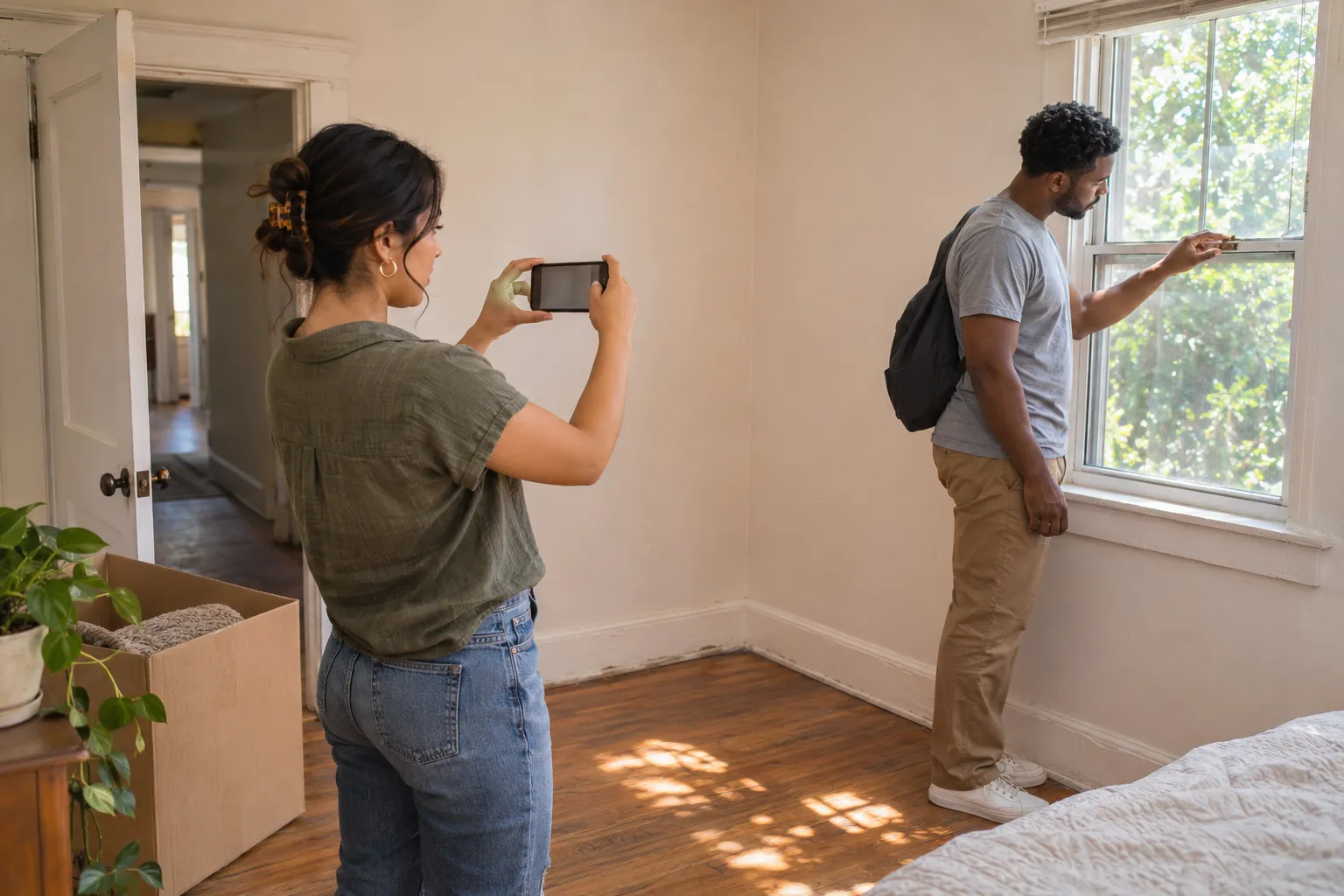
Walk every room with the renter if you can. Take dated photos or video of walls, floors, fixtures, appliances, windows and doors, and note existing damage in writing. Several states set rules for this record:
- Washington: you may not collect a deposit unless the lease is in writing and you give the tenant a signed, dated checklist or statement describing the unit's condition at the start of the tenancy (RCW 59.18.260).
- Virginia: within five days after move-in, give the tenant a written report itemizing existing damage; it stands unless the tenant objects in writing within five days after receiving it (Va. Code § 55.1-1214(A)).
- Michigan: if you require a deposit, give the tenant two blank copies of a move-in inventory checklist; the tenant returns one completed copy within 7 days (MCL 554.608).
- Arizona: give a move-in form for listing existing damage and written notice that the tenant may be present at the move-out inspection (A.R.S. § 33-1321(C)).
- California: for a tenancy beginning on or after July 1, 2025, photograph the unit immediately before, or at the start of, the tenancy (Cal. Civ. Code § 1950.5(g)).
Hand over keys and information
- A signed key receipt listing every key, fob and remote.
- How and when to pay rent, and the late fee terms.
- How to submit maintenance requests and what counts as an emergency.
- Where the water shutoff and electrical panel are.
- Trash and recycling days, parking rules and any building rules.
- How you give notice before entering the home.
Handle the deposit correctly
Some states set rules for where the deposit must be held:
- Florida: hold it in a separate account in a Florida financial institution, with or without interest, or post a surety bond and pay interest (Fla. Stat. § 83.49(1)).
- North Carolina: hold it in a trust account with a licensed, federally insured depository institution or authorized trust institution, or furnish a bond (N.C. Gen. Stat. § 42-50).
- New Hampshire: hold it in trust apart from your own funds, and pay interest if you hold it for a year or longer (RSA 540-A:6, II; RSA 540-A:6, IV).
The first week after move-in
Check in after a few days to ask whether anything is not working, and fix early problems quickly. Collect the renter's notes on the condition of the home by your state's deadline. In New Hampshire, when you receive a deposit you must tell the tenant in writing that conditions needing repair should be noted on the receipt or given to you in writing within five days of moving in (RSA 540-A:6, I(b)). Store the lease, disclosures, receipts, photos and condition report together.
How Rentari helps
In Rentari, the signed lease and its documents stay on the lease, and renters can submit maintenance requests and message you from day one. Rent collection with autopay and receipts starts with the first payment, and renters insurance is available to your renters.
Sources and further reading
- EPA: Lead-based paint disclosure rule for sales and leases
- Mass. G.L. c. 186, § 15B: security deposits (Massachusetts)
- Tex. Prop. Code chapter 92: residential tenancies (Texas)
- RCW 59.18.260: move-in checklist (Washington)
- Va. Code § 55.1-1214: move-in inspection (Virginia)
- MCL 554.608: inventory checklist (Michigan)
- A.R.S. § 33-1321: move-in form (Arizona)
- Cal. Civ. Code § 1950.5: security deposits and photos (California)
- Fla. Stat. § 83.49: deposit money (Florida)
- N.C. Gen. Stat. § 42-50: deposits held in trust (North Carolina)
- RSA 540-A:6: security deposits (New Hampshire)
Common questions
Should I hand over keys before the first payment clears?
It is safer to wait until the first payment and deposit have cleared and every adult has signed the lease. Agree on the timing in advance so move-in day has no surprises.
Do I need a move-in inspection checklist?
Several states require one, including Washington, Virginia and Michigan. Texas does not require a general move-in inspection, but a dated record of the home's condition is still useful evidence if a deposit deduction is disputed.
Does every rental need a lead paint disclosure?
Only housing built before 1978, and the EPA lists exemptions such as leases of 100 days or less and zero-bedroom units where no child under six lives or is expected to live.
When should I change the locks?
Texas requires rekeying within seven days after each new tenant moves in. Elsewhere, rekeying before each new renter moves in is a sensible habit.
Archive years group longstanding rental topics. This Rentari guide was published on 2026-11-14.
The Rentari team writes and updates this guide. Examples illustrate decisions and do not describe customer results. This is general education. Confirm the rules and treatment for your property with a qualified local professional. Found an error or an unclear step? Send a correction with a link to this page and the wording you’d change.