- Home
- State laws
- Massachusetts
- Breaking a lease
Breaking a lease in Massachusetts
Checked against the Massachusetts statutes on September 24, 2026 General information, not legal advice
- List the unit quickly
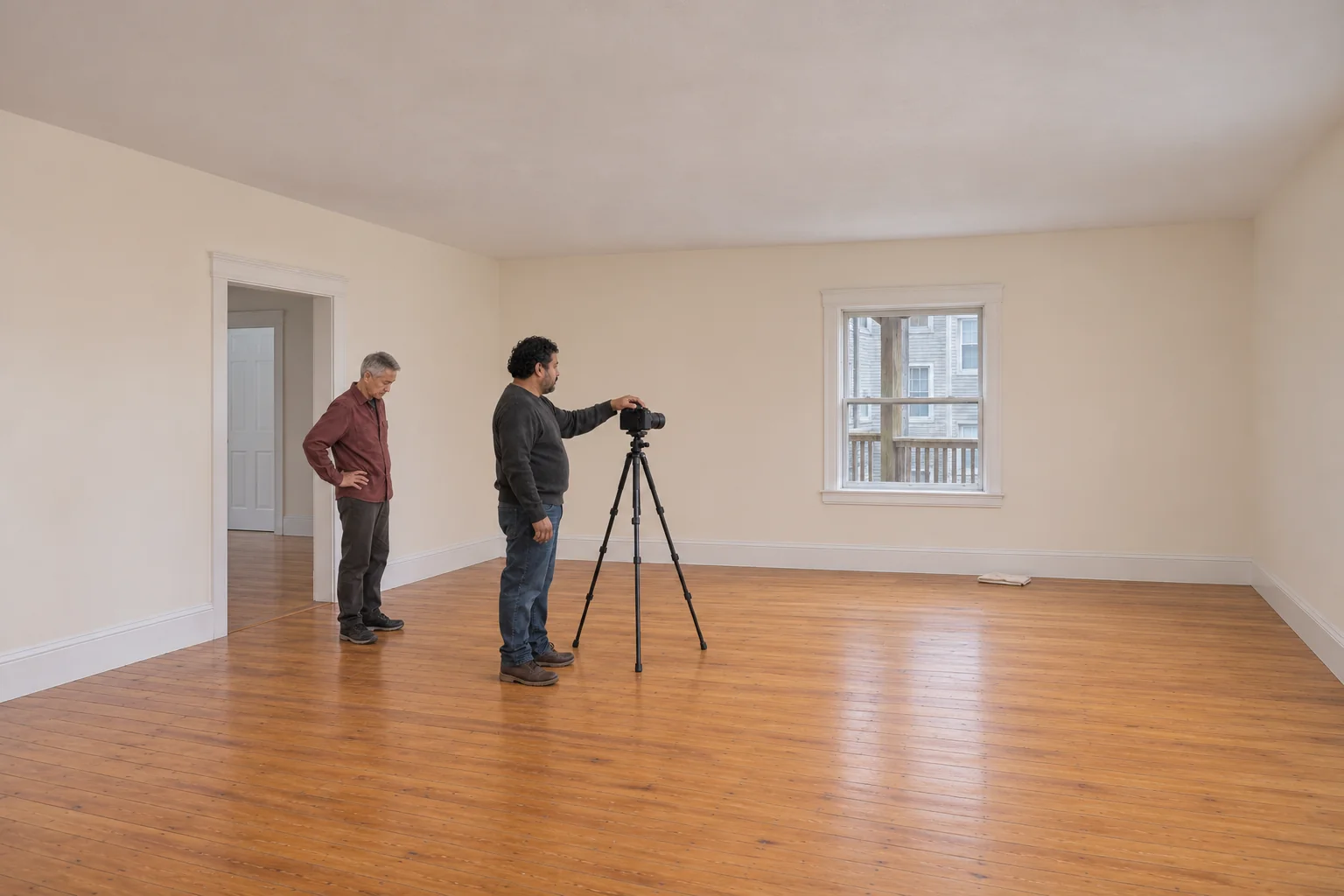
- Show the space and light
- Clean rooms rent faster
Key numbers
- Deposit return deadline
- 30 days
- after the tenancy ends, with a sworn list for any damage
- Mass. G.L. c. 186, § 15B(4)
Ending a fixed-term lease early
Chapter 186 has no general early-termination rule for tenants. A tenant or co-tenant may end a lease by written notice that a household member is a victim of domestic violence, rape, sexual assault or stalking, given within three months of the most recent act or while a household member is reasonably in fear of imminent serious physical harm. The tenant must move out within three months of the notice, or the notice is void (Mass. G.L. c. 186, § 24).
- The tenant owes rent for 30 days or one full rental period after the quitting date, whichever is later, gets back any prepaid rent after that, and gets the deposit statement and refund within 30 days after all occupants deliver possession (Mass. G.L. c. 186, § 24(c)).
- You may ask for proof: a protective order, a court or police record, or a written verification from a qualified third party. Keep it confidential (Mass. G.L. c. 186, § 24(e), (f)).
- Other tenants on the lease stay bound (Mass. G.L. c. 186, § 24(d)).
- You may not refuse to rent to someone because they ended a lease this way or asked for a lock change (Mass. G.L. c. 186, § 25).
- On foreclosure, a tenant under an unexpired lease becomes a tenant at will, but a subsidized tenant's lease continues (Mass. G.L. c. 186, § 13A).
- An agreed early termination is separate from the statutory protections above. If you negotiate a release, record the agreed end date, key return, rent and other amounts remaining, treatment of prepaid rent and the deposit, and whether every tenant or only a named tenant is released. Keep a signed copy and the final accounting. A conversation about moving, permission to look for a replacement or a proposed fee does not clearly establish all of those terms. Check the lease and applicable protections before treating a payment as the price of release (Massachusetts Attorney General: landlord and tenant rights).
The lease restates the domestic violence termination right, and otherwise keeps the tenant liable for rent through the term while the landlord makes reasonable efforts to re-rent.
Tenant repair remedies
When a board of health, code enforcement agency or court certifies a violation that may endanger or materially impair the tenant's health, safety or well-being, and the owner, after written notice, fails to begin repairs (or contract for them in writing) within five days and to substantially complete them within fourteen days, the tenant may make the repairs and deduct the cost from rent, or end the tenancy, pay only the fair value of use and vacate within a reasonable time (Mass. G.L. c. 111, § 127L; Mass. G.L. c. 239, § 8A).
- A tenant may deduct no more than four months' rent in any twelve-month period, or the period of occupancy if shorter. The owner may recover any excess or unreasonable amount in a contract action, not in an eviction (Mass. G.L. c. 111, § 127L).
- The remedy does not cover conditions caused by the tenant, household or guests, or a tenant who unreasonably refused access for repairs. A shorter period ordered by a board of health, code agency or court governs (Mass. G.L. c. 111, § 127L).
- In an eviction for nonpayment, or after a no-fault termination, the tenant may raise the landlord's breach of warranty or of the rental agreement, or a violation of law, as a defense or counterclaim, including repair costs spent under the repair and deduct law. No possession is awarded if the tenant's claim equals or exceeds the rent owed (Mass. G.L. c. 239, § 8A).
- A lease waiver of these rights is void, except a lease of two years in which the tenant agrees to make defined repairs for substantially lower rent (Mass. G.L. c. 111, § 127L).
The lease restates repair and deduct in the statute's terms: certification, written notice, five days to begin and fourteen to substantially complete, a cap of four months' rent in twelve months, or ending the lease.
Subletting and assignment
Not set by statuteMassachusetts has no statute that sets a general rule on subletting a home. The lease controls, so state in it whether the tenant needs your written consent (Mass. G.L. c. 186).
Ending a month-to-month tenancy
Either side may end a tenancy at will by written notice. Where rent is paid at intervals shorter than three months, the notice must be at least as long as the interval between rent days or thirty days, whichever is longer; otherwise it is three months. The notice may offer a new tenancy on different terms (Mass. G.L. c. 186, § 12).
- When a landlord ends a tenancy at will without fault of the tenant, no eviction may be brought until that same period has run from the tenant's receipt of the written notice, and the tenant pays rent at the old rate while staying (Mass. G.L. c. 186, § 13).
- A sale, transfer or foreclosure does not by itself end a tenancy at will of a home (Mass. G.L. c. 186, § 13).
The lease says a tenancy at will may be ended by either party on thirty days' written notice or one full rental period, whichever is longer.
Returning the deposit
Return the deposit, or the balance, with any interest, within 30 days after a tenancy at will ends or after the end of the tenancy stated in a written lease. You may deduct only unpaid rent or water charges not lawfully withheld, a real estate tax increase owed under a tax escalation clause that meets the statute, and a reasonable amount to repair damage caused by the tenant or people under the tenant's control, never reasonable wear and tear. No other deduction is allowed (Mass. G.L. c. 186, § 15B(4); Mass. G.L. c. 186, § 15B(6); Mass. G.L. c. 186, § 15B(7)).
- To deduct for damage, give the tenant within the 30 days an itemized list of damages sworn under the pains and penalties of perjury, describing the damage and repairs in precise detail, with written evidence of the cost such as estimates, bills, invoices or receipts (Mass. G.L. c. 186, § 15B(4)(iii)).
- You may not deduct for damage listed on the statement of condition, or on a tenant's list you signed, unless you repaired it afterward and can prove the new damage is unrelated and was caused by the tenant (Mass. G.L. c. 186, § 15B(4)).
- You lose the right to keep any part of the deposit, and to counterclaim for damage in the tenant's suit, if you did not hold it in a proper account, did not send the itemized list on time, tried to enforce a lease term that conflicts with the deposit law, failed the rules on transfer to a new owner, or did not return the balance and interest within 30 days (Mass. G.L. c. 186, § 15B(6)).
- Failing to hold the deposit as required, failing the transfer rules, or failing to return it on time costs three times the deposit or balance owed, plus 5 percent interest from the due date, court costs and reasonable attorney's fees (Mass. G.L. c. 186, § 15B(7)).
- When you sell or otherwise transfer the property, transfer the deposit and interest to the new owner. The new owner must notify the tenant in writing within 45 days, with the owner's and any agent's name, business address and business telephone number. A mortgage is not a transfer (Mass. G.L. c. 186, § 15B(5)).
- Keep a record of each deposit, damage, repairs and their cost, with copies of receipts and statements of condition, for two years after the tenancy ends, and let the tenant inspect it on request. Wrongly refusing inspection entitles the tenant to the immediate return of the deposit with interest (Mass. G.L. c. 186, § 15B(2)(d)).
The lease promises the deposit and interest back within 30 days after the tenancy ends, lists the only deductions allowed, requires a sworn itemized list with written evidence of cost, and states the triple damages.
Options short of breaking the lease
When a tenant asks to leave early without one of the reasons above, these are the usual ways to settle it. Put whatever you agree in writing, signed by every tenant on the lease.
Steps for an early move-out
- Read the lease
Find the early termination clause, the notice terms and the subletting rule.
- Match the reason
If the tenant gives a legal reason, check it against the Massachusetts rule above and ask only for the documents that rule names.
- Confirm in writing
Record the end date, the final rent and any fee, and keep proof of delivery.
- Close out the tenancy
Inspect and photograph the home, try to re-rent where the rules above require it, and return or itemize the deposit by the deadline.
Legal help in Massachusetts
Questions
How much notice ends a month-to-month tenancy?
Written notice at least as long as the time between rent days or thirty days, whichever is longer, when rent is paid more often than every three months (Mass. G.L. c. 186, § 12).