- Home
- State laws
- New Jersey
- Breaking a lease
Breaking a lease in New Jersey
Checked against the New Jersey statutes on October 1, 2026 General information, not legal advice
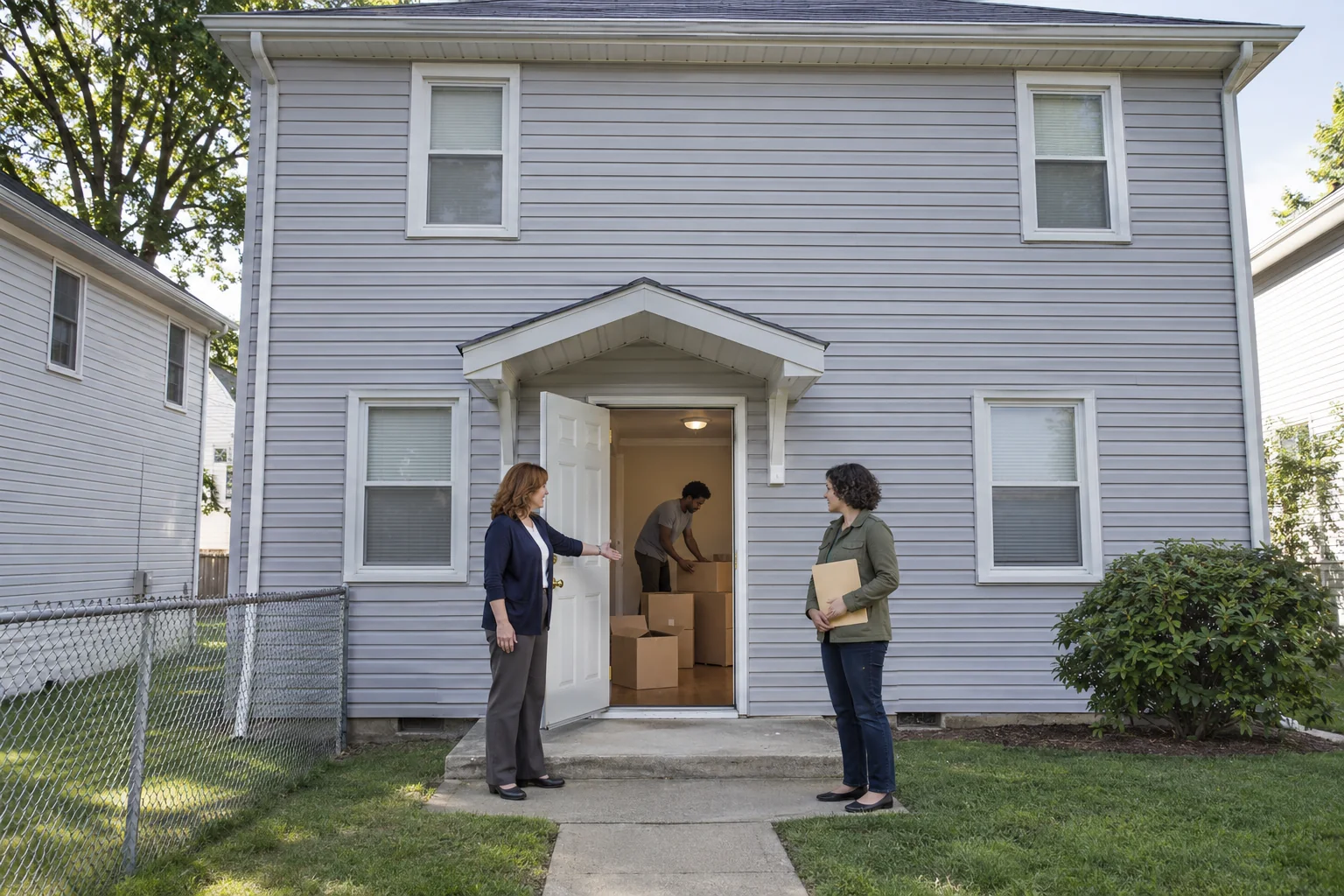
- Show the unit to new renters
- The tenant can still move out
- A new lease can end the old one
Key numbers
- Ending month to month
- Good cause
- needed in most buildings; one month's notice to quit only where the Anti-Eviction Act does not apply
- N.J.S.A. 2A:18-61.1N.J.S.A. 2A:18-56(b)
- Deposit refund deadline
- 30 days
- after the lease ends, with interest and an itemized list
- N.J.S.A. 46:8-21.1
- Penalty for withholding
- Double
- the amount owed, plus costs, if a court finds for the tenant
- N.J.S.A. 46:8-21.1
Ending a lease early
Partly readNew Jersey lets a tenant end a lease early in several situations. Under the Safe Housing Act, a tenant who gives written notice that the tenant or a child faces an imminent threat of serious physical harm from a named person, with one of the listed documents, may end the lease; it ends on the 30th day after you receive the notice unless you agree to an earlier date. Whether you must try to re-rent after a tenant simply leaves early comes from court decisions, which were not read for this page (N.J.S.A. 46:8-9.6; N.J.S.A. 46:8-9.7).
- Qualifying documents include a certified copy of a permanent restraining order, a law enforcement record, medical documentation, or a certification from a domestic violence specialist, the director of a designated domestic violence agency or a licensed social worker. Co-tenants' leases end too, and the rights cannot be waived (N.J.S.A. 46:8-9.6; N.J.S.A. 46:8-9.7(c); N.J.S.A. 46:8-9.9).
- Section 46:8-9.1 addresses qualifying residential leases of one year or more when the tenant or spouse dies, with notice from the tenant, the estate's executor or administrator, or a surviving spouse under the statute's joint-lease condition. Termination takes effect on day 40 after receipt of written notice, rent continues through termination, and possession must be returned at least five working days earlier. The section does not apply if the lease expressly provides otherwise (N.J.S.A. 46:8-9.1).
- For a residential lease of one year or more, section 46:8-9.2 provides separate release routes for disabling illness with financial loss, certain housing moves by a tenant or spouse age 62 or older, or a household member's accessibility needs. With qualifying written notice and proof, termination takes effect on day 40; rent continues through that date, and possession must be returned at least five working days beforehand (N.J.S.A. 46:8-9.2).
- A tenant who enters military service after signing may end the lease by written notice. For monthly rent the termination takes effect 30 days after the next rent due date following the notice, and you may not charge the tenant or any co-signer an early termination penalty or fee (N.J.S.A. 38:23C-14).
- If you fail to disclose that the property is in a FEMA flood hazard area and the tenant learns of it, the tenant may end the lease by written notice (N.J.S.A. 46:8-50(e)).See Flood disclosure on the New Jersey page
- Safe Housing termination requires good faith and compliance with the notice/document rules. Rent is prorated through the effective termination date. When the other co-tenants' leases end too, the landlord may offer them a new lease or permit them to hold over (N.J.S.A. 46:8-9.7).
- Keep Safe Housing domestic-violence documentation confidential. It may not be entered into a shared database or disclosed to others. The statute permits use when required as evidence in specified tenancy proceedings, with the tenant's consent, or as otherwise required by law (N.J.S.A. 46:8-9.11).
- For premises controlled by a public housing authority or redevelopment agency, the tenant follows relevant public-housing notice regulations. Where a publicly funded housing-assistance contract controls the tenancy, state or federal restrictions can govern notice and deposit terms and protections (N.J.S.A. 46:8-9.8).
- The Safe Housing Act excludes a qualifying seasonal rental of no more than 125 consecutive days to someone with a permanent residence elsewhere. The landlord must prove that seasonal status. The statutory exclusion does not include the described seasonal, temporary or migrant farm-worker living quarters (N.J.S.A. 46:8-9.12).
- The disabling-illness route requires a treating physician's certification of inability to work, proof of income loss and proof that pension, insurance or other support cannot make up the income needed for rent. For the age-62 care-facility route, provide medical-need certification and acceptance documents. The separate low/moderate-income housing route requires lease or intent-to-lease documentation and excludes a tenant already living in that housing (N.J.S.A. 46:8-9.2).
- The accessibility route can concern a disabled household member. Its notice includes a licensed physician's certification that the disability is likely not temporary, plus a statement that the landlord was asked to make the unit accessible at the landlord's expense and was unable or unwilling to do so (N.J.S.A. 46:8-9.2).
The Rentari New Jersey lease restates the Safe Housing Act, and its early termination clause keeps the tenant liable for rent while you make reasonable efforts to re-rent.
Tenant repair remedies
Partly readBy statute, a tenant or a public officer may ask the court to have rents deposited with it and used to correct conditions that substantially violate housing or health codes, or to correct a wrongful diversion of utility service. Repair-and-deduct and rent abatement rest on court decisions, which were not read for this page (N.J.S.A. 2A:42-87; N.J.S.A. 2A:42-88).
- Rent a tenant uses to keep electric, gas, water or sewer service on, after the utility warns of a shutoff for the landlord's nonpayment, is not unpaid rent for eviction purposes (N.J.S.A. 2A:18-61.1(a)).See Lockouts and utility shutoffs on the New Jersey page
The Rentari New Jersey lease says the tenant may pursue repair-and-deduct, rent abatement or constructive eviction defenses after written notice and a reasonable cure period.
Subletting and assignment
Not set by statuteNew Jersey has no statute that sets a general rule on subletting a home. The lease controls, so state in it whether the tenant needs your written consent (N.J.S.A. Titles 2A and 46 (landlord and tenant statutes)).
Ending a month-to-month tenancy
If the Anti-Eviction Act covers the home, a month-to-month tenancy does not end just because you give notice: you need one of the Act's good causes, with the notice that cause requires. Only where the Act does not apply, such as an owner-occupied building with no more than two rental units, does one month's notice to quit end a month-to-month tenancy (N.J.S.A. 2A:18-61.1; N.J.S.A. 2A:18-53; N.J.S.A. 2A:18-56(b)).
- A tenant who stays after the lease term ends and whose rent you accept becomes a month-to-month tenant unless you agreed otherwise (N.J.S.A. 46:8-10).
- Personal occupancy by the owner of a building with three or fewer units, or a sale to a buyer who wishes to live there under a contract requiring the unit to be vacant at closing, is a good cause; it needs two months' notice and cannot be used before a written lease expires (N.J.S.A. 2A:18-61.1(l)(3); N.J.S.A. 2A:18-61.2(f)).See Good cause for eviction on the New Jersey page
- If the tenant leaves after an owner-occupancy notice and you then arbitrarily fail to live there for at least six months, or let another tenant move in, the former tenant can recover three times the damages plus attorney's fees and costs (N.J.S.A. 2A:18-61.6(a)).
Returning the deposit
Within 30 days after the lease ends, return the deposit with the tenant's share of the interest, less charges allowed by the lease, by personal delivery or by registered or certified mail. Itemize the interest and every deduction, and send that notice the same way (N.J.S.A. 46:8-21.1).
- You may not take deductions from the deposit of a tenant who is still in possession (N.J.S.A. 46:8-21.1).
- If a fire, flood, condemnation or evacuation displaces the tenant and a public official posts a notice barring occupancy or a building inspector certifies the displacement will last more than seven days, make the deposit available on demand within five business days, and give the tenant written notice within three business days of learning of the displacement (N.J.S.A. 46:8-21.1).
- After a lease ends under the Safe Housing Act, make the deposit available on demand within 15 business days. Give the separate written availability notice within three business days after termination, identifying pickup location and hours. Follow the duplicate-notice and applicable posting requirements. The net refund must remain available on demand for 30 days; uncollected amounts must be redeposited as specified (N.J.S.A. 46:8-21.1).See Ending a lease early on the New Jersey page
- If a court finds for the tenant in a suit to recover the deposit, it awards double the amount owed, full costs and, at its discretion, reasonable attorney's fees (N.J.S.A. 46:8-21.1).
- When the lease ends because the tenant died, the deposit goes to the executor, administrator or surviving spouse (N.J.S.A. 46:8-21.1).
- DCA's security-deposit bulletin describes deductions for damage beyond ordinary wear and money due under the lease. Compare dated move-in and move-out records, photographs, the lease and actual repair evidence before withholding. Aging paint or a routine refresh does not by itself establish a damage charge. Keep the refund calculation, interest, itemization and delivery records when reviewing a dispute (N.J.S.A. 46:8-21.1; NJ DCA Security Deposit Bulletin, revised July 2025).
The Rentari New Jersey lease promises return with interest and an itemized statement within 30 days after termination, five business days after a displacement and 15 business days after a Safe Housing Act termination, and repeats the double-damages remedy.
Options short of breaking the lease
When a tenant asks to leave early without one of the reasons above, these are the usual ways to settle it. Put whatever you agree in writing, signed by every tenant on the lease.
Steps for an early move-out
- Read the lease
Find the early termination clause, the notice terms and the subletting rule.
- Match the reason
If the tenant gives a legal reason, check it against the New Jersey rule above and ask only for the documents that rule names.
- Confirm in writing
Record the end date, the final rent and any fee, and keep proof of delivery.
- Close out the tenancy
Inspect and photograph the home, try to re-rent where the rules above require it, and return or itemize the deposit by the deadline.
Legal help in New Jersey
Questions
Can I end a month-to-month lease without a reason?
Usually not. The Anti-Eviction Act requires one of its listed good causes for most residential tenants, even on a month-to-month tenancy. Only where the Act does not apply, such as an owner-occupied building with no more than two rental units, does one month's notice to quit end it (N.J.S.A. 2A:18-61.1; N.J.S.A. 2A:18-53; N.J.S.A. 2A:18-56(b)).
Do I need to send a notice before filing for unpaid rent?
No notice to quit is required for nonpayment. After a judgment, the tenant still has three business days after the warrant is posted or a lockout to pay everything owed, and you must accept it (N.J.S.A. 2A:18-61.2; N.J.S.A. 2A:42-10.16a).