The short answer
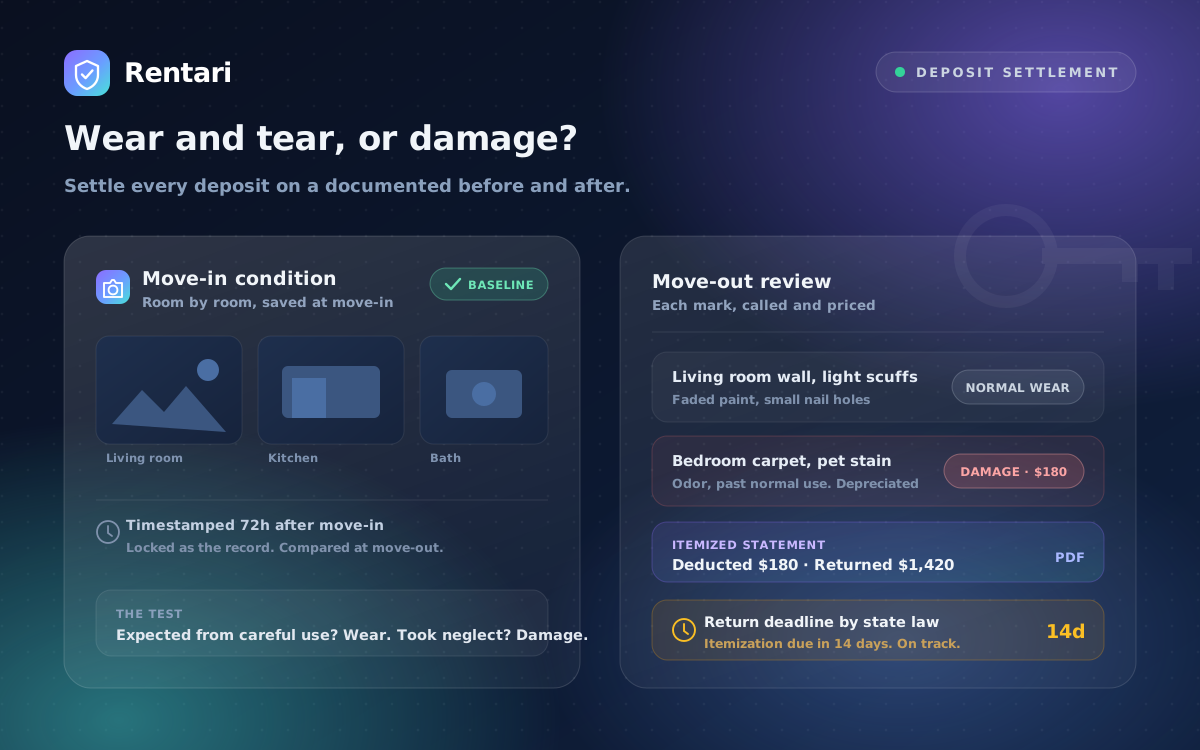
Deduct only amounts permitted by the applicable law and agreement, supported by the facts and required documentation. Ordinary wear, pre-existing defects and owner improvements should not be treated as tenant damage by default.
On this page
Review each proposed item
Compare condition records, maintenance history and the actual work needed. Identify any unpaid obligation separately. Check rules governing cleaning, replacement, estimates, useful life and permitted amounts for the property.
Reconcile and explain the result
Account for the deposit held, required interest, lawful deductions and refund. Meet the applicable statement and return requirements, and retain proof of the completed process.
Example: a replacement is an upgrade
A damaged basic fixture is replaced with a more expensive model chosen by the owner. The full purchase price is not automatically the recoverable loss. Review the lawful basis and evidence rather than passing the entire improvement cost to the resident.
References and next steps
Use these references for the specific topic they cover. Local requirements and individual circumstances may differ.
The Rentari team writes and updates this guide. Examples illustrate decisions and do not describe customer results. This is general education. Confirm the rules and treatment for your property with a qualified local professional. Found an error or an unclear step? Send a correction with a link to this page and the wording you’d change.