The short answer
An emergency generally involves an immediate threat to people, essential conditions or serious property damage, but the response depends on the facts. Residents should use emergency services for immediate danger and the property's urgent reporting route.
On this page
Collect essential information safely
Identify the location, reported hazard and callback details. Do not ask residents to investigate dangerous electrical, gas or structural conditions to complete a routine intake form.
Escalate to actual response
Contact the responsible person or appropriate emergency professional and confirm the handoff. Record updates and follow through until the immediate danger and remaining repair needs are addressed.
Example: active flooding
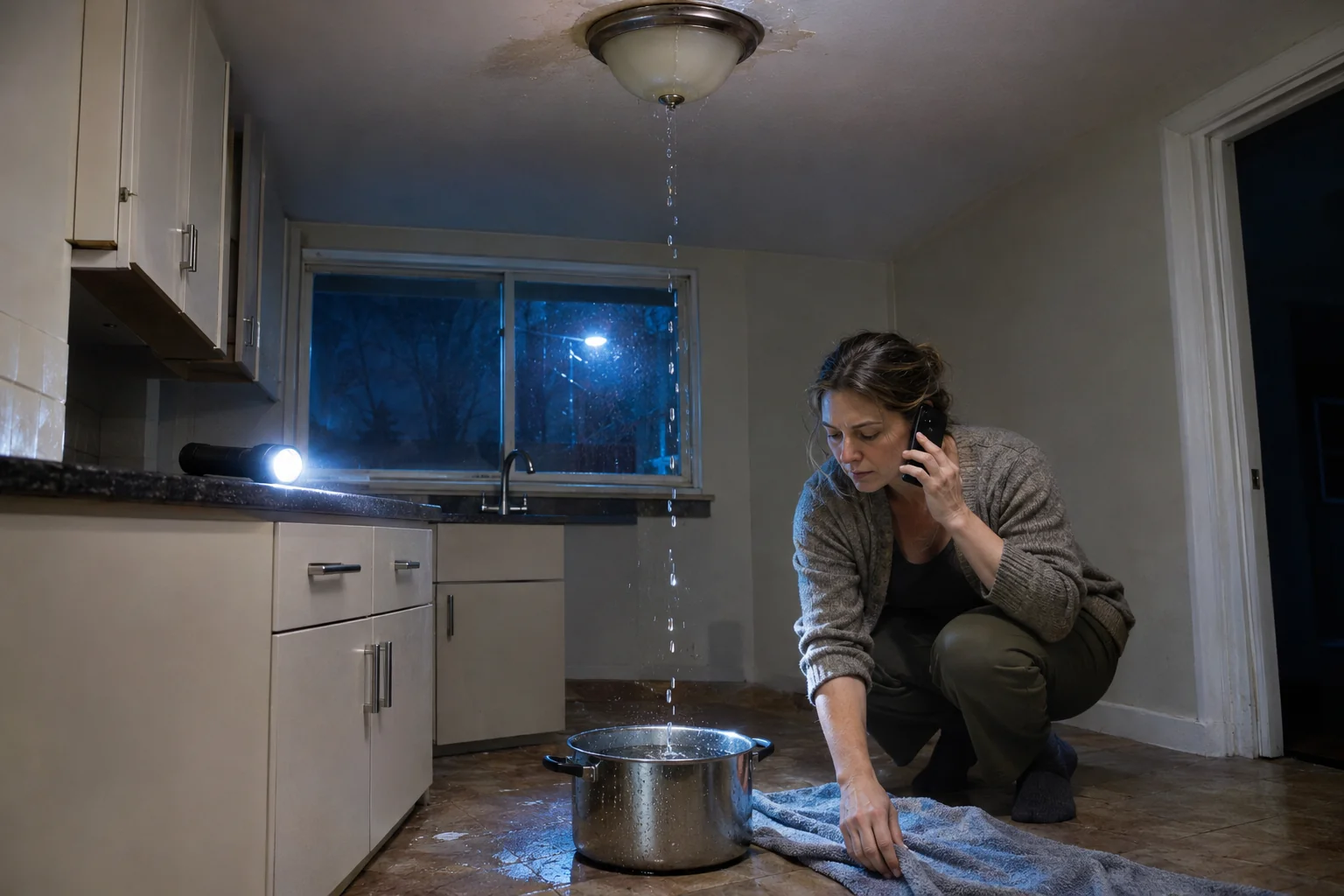
A report of rapidly spreading water needs prompt assessment and the established urgent response. A routine next-business-day acknowledgment alone does not establish that someone is addressing the condition.
References and next steps
Use these references for the specific topic they cover. Local requirements and individual circumstances may differ.
The Rentari team writes and updates this guide. Examples illustrate decisions and do not describe customer results. Found an error or an unclear step? Send a correction with a link to this page and the wording you’d change.