The short answer
Staging helps renters understand a home quickly: how big the rooms are, where furniture fits and what is included. Cleaning, light and a few simple pieces do more than expensive props. Every photo should show the home a renter will actually get.
On this page
What staging should do for a rental
Staging a rental is not about making it look like a magazine. It helps a renter answer practical questions fast: Will my bed fit? Where does the couch go? How much light does the kitchen get? Good staging answers those questions before a renter has to ask.
A renter will live with the real home for a year or more. Aim for a clean, bright and accurate picture that matches what they see when they walk in. A showing that feels different from the photos costs you trust, and often the lead.
Start with cleaning, small repairs and light
Most of the effect comes from work that costs little:
- Deep clean kitchens, bathrooms, windows, floors and baseboards. Remove odors at the source instead of covering them.
- Fix what a renter will notice: burned-out bulbs, dripping taps, loose handles, sticking doors, missing outlet covers and scuffed paint.
- Use matching bulbs so rooms do not look yellow in one photo and blue in the next.
- Clear every surface. Empty counters, closets and the cabinet under the sink so renters can see the storage.
- Tidy the approach: walkway, entry, mailbox, trash area and parking. The first photo and the first step onto the property set expectations.
Furnish lightly, room by room
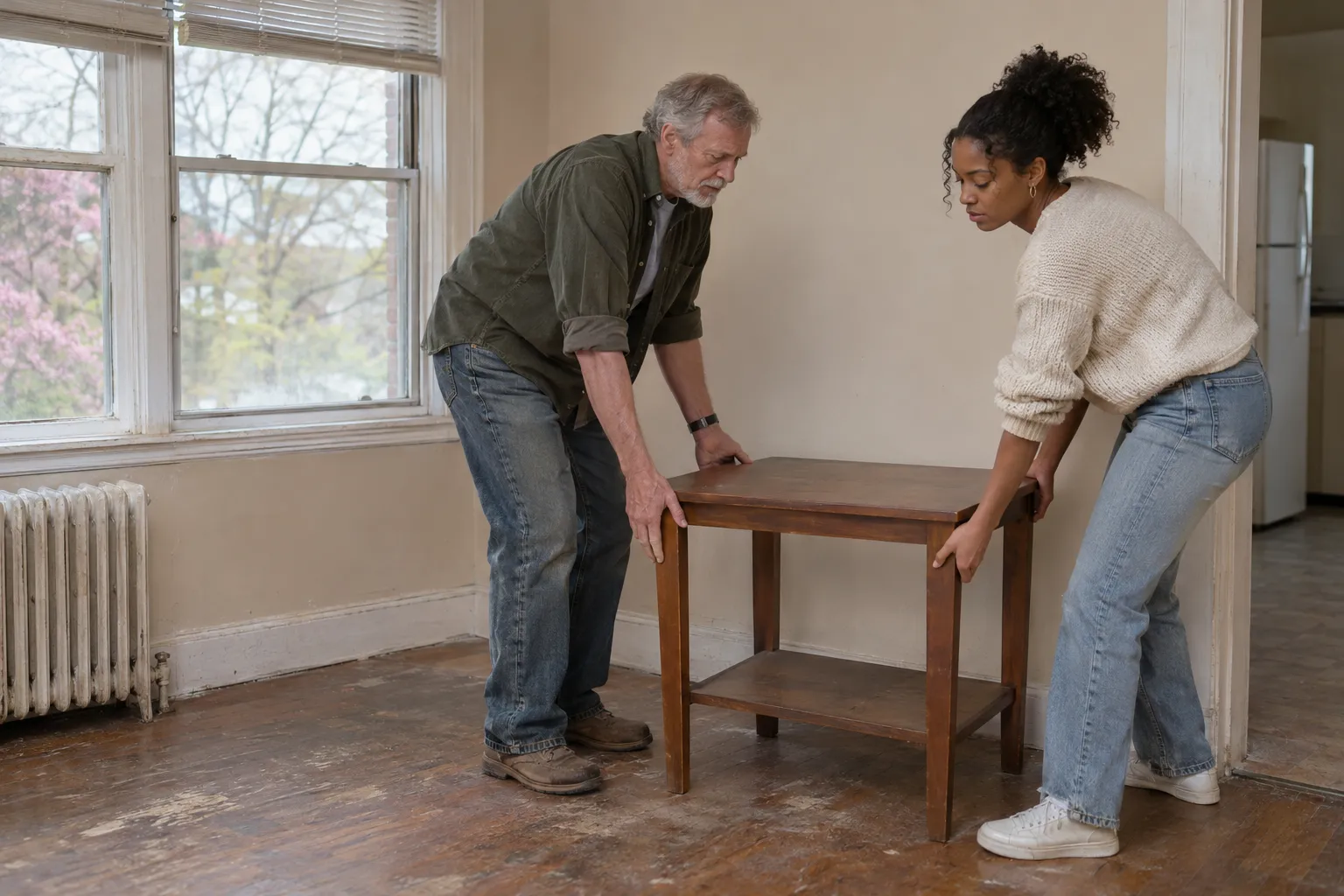
An empty room can look smaller than it is because there is nothing to judge scale against. A few pieces fix that:
- Bedrooms: a bed with plain linens shows what size fits. If you stage only one bedroom, stage the smallest.
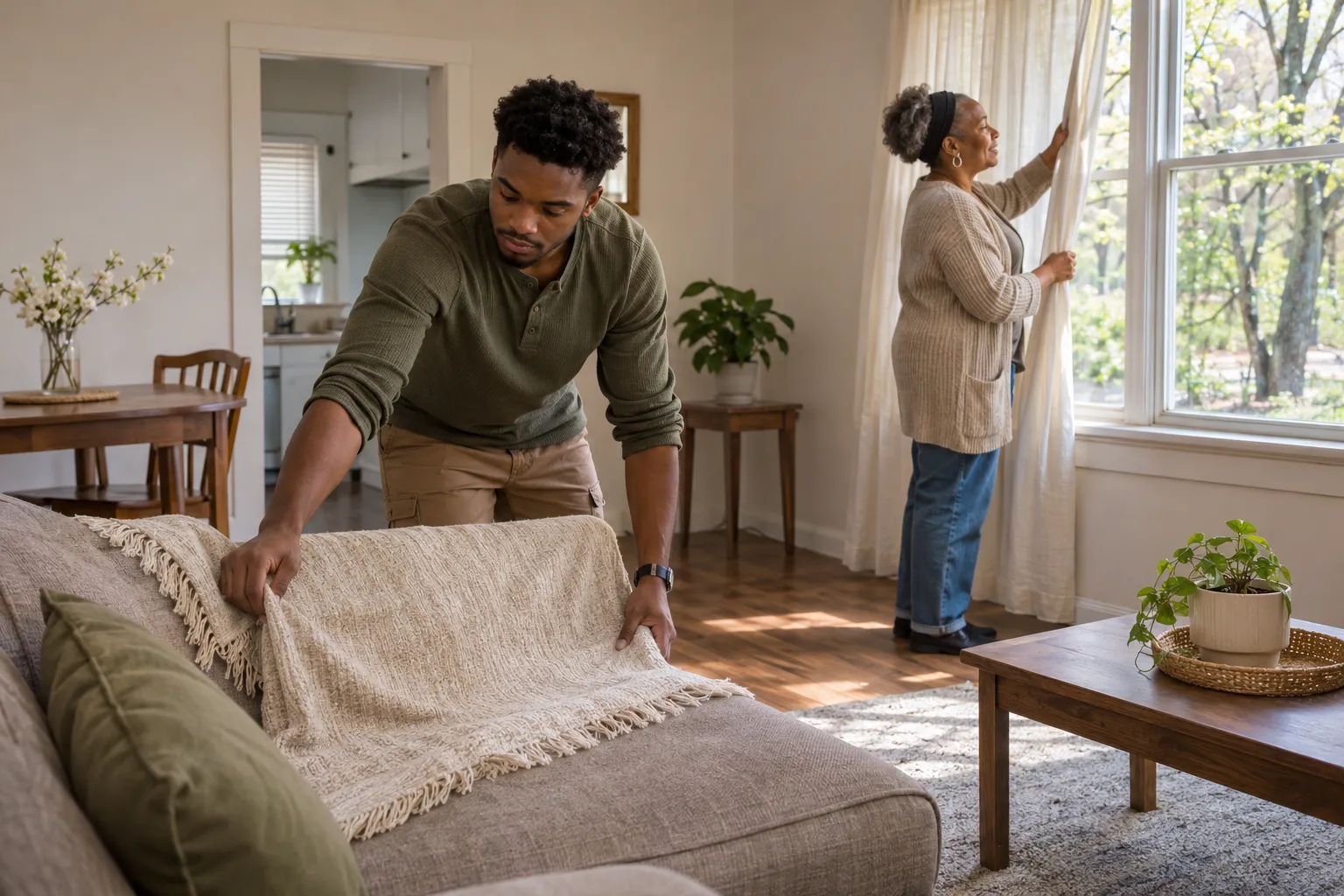
- Living area: a sofa or two chairs and a rug show a usable layout without hiding the floor.
- Kitchen and dining: a small table in a dining nook, and no more than one or two items on the counter.
- Bathrooms: a shower curtain and clean towels.
Leave no doubt about what stays. If a washer, dryer, window unit or any furniture is not included, say so in the listing or take it out of the photos.
Take photos that match the listing
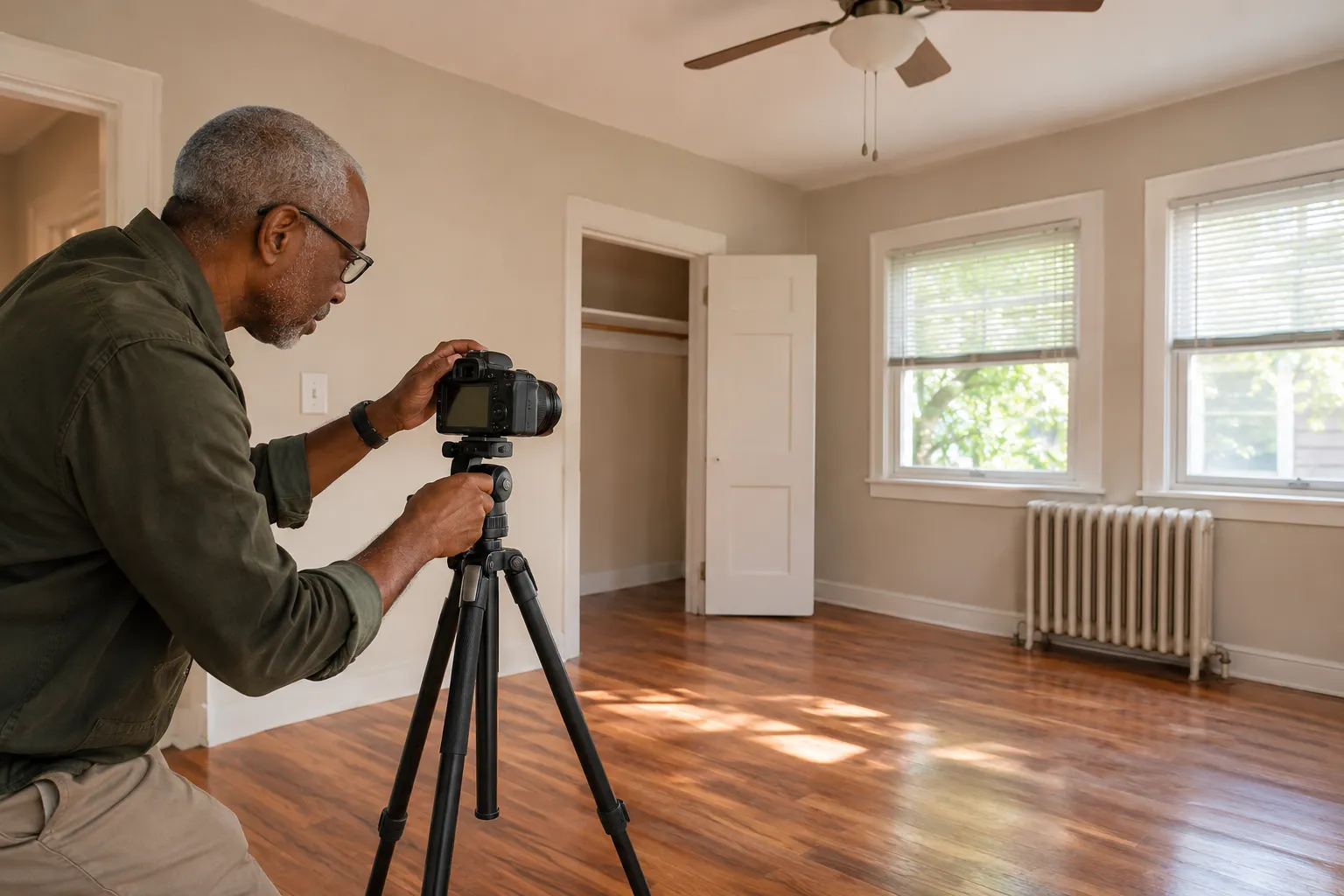
Shoot in daylight with blinds open and every light on. Hold the camera level at about chest height and use a wide setting that does not bend the walls. Show every room a renter will use, plus the outside, parking, laundry and any storage that comes with the unit, in the order someone would walk through.
Do not edit out stains, cracks or a neighbor's wall. If you use virtual staging, say so in the caption and include an unedited photo of the same room. Photos should show the home, not the kind of person you picture living there. Federal fair housing rules give, as an example of a discriminatory ad, using words, phrases, photographs or illustrations that convey a home is or is not available to a particular group because of a protected characteristic (24 C.F.R. § 100.75). The Fair Housing Act bars any rental ad that indicates a preference, limitation or discrimination based on race, color, religion, sex, handicap, familial status or national origin (42 U.S.C. § 3604(c)).
Prepare the home before each showing
- Arrive early to turn on lights, set a comfortable temperature and air out the rooms.
- Put out a one-page fact sheet with the rent, deposit, utilities, pet policy, available date and how to apply.
- Give every visitor the same facts and the same next step.
- Check the route in and out, keep keys and paperwork out of sight, and lock up afterward.
Answer accessibility questions with plain facts, such as the number of steps at the entry or whether there is an elevator. Facts help renters decide for themselves.
Staging and showing an occupied rental
When the current renter still lives there, their home and privacy come first. State law sets when you may enter to show the unit:
- Washington: one day's notice is enough to show the unit to prospective tenants or buyers, and you may not show it excessively (RCW 59.18.150(6)).
- Minnesota: make a good faith effort to give at least 24 hours' notice, and enter only between 8 a.m. and 8 p.m. unless the tenant agrees to another time (Minn. Stat. § 504B.211, subd. 2). Showing the unit to prospective tenants near the end of the lease is a listed business purpose (Minn. Stat. § 504B.211, subd. 3).
- California: except in an emergency or with the tenant's consent at the time, give reasonable written notice and enter only during normal business hours (Cal. Civ. Code § 1954(a), (b), (d)(1)).
Ask before photographing a renter's belongings. If nothing has changed, photos from the last vacancy may serve until the unit is empty. Group showings into a few set windows so the renter is not disturbed every day.
Keep the listing honest after it goes live
The FTC warns renters that scammers copy the photos and description from real rental listings and swap in their own contact details. After you post, search for your address and a distinctive photo to spot copies, and report any you find to the site. Update the photos whenever the condition of the home changes.
Listing photos are not a move-in record. In California, for a tenancy that begins on or after July 1, 2025, you must photograph the unit immediately before, or at the start of, the tenancy (Cal. Civ. Code § 1950.5(g)). Wherever you are, take a separate, dated set of photos when the renter moves in.
How Rentari helps
Rentari listings syndicate your photos and details to listing sites, and the leasing inbox keeps every lead's questions in one place. You can schedule showings from the same listing, so each visitor gets the same facts and the same next step.
Sources and further reading
- eCFR 24 C.F.R. § 100.75: discriminatory advertisements, statements and notices
- 42 U.S.C. § 3604: Fair Housing Act prohibitions
- FTC: Rental listing scams
- RCW 59.18.150: landlord's right of entry (Washington)
- Minn. Stat. § 504B.211: tenant's right to privacy (Minnesota)
- Cal. Civ. Code § 1954: landlord entry (California)
- Cal. Civ. Code § 1950.5: security deposits and move-in photos (California)
Common questions
Should I use virtual staging in rental photos?
It can help renters judge scale, but label it clearly and include an unedited photo of each staged room so the listing matches what renters see in person.
Which rooms should the photos cover?
Every room a renter will use, plus the exterior, parking, laundry and any storage that comes with the unit. A missing room invites questions and can cost you the lead.
Can I show a unit while the current renter still lives there?
Usually, with the notice your state and lease require. Washington, for example, allows one day's notice to show a unit to prospective tenants, and Minnesota requires a good faith effort to give at least 24 hours' notice.
Can I photograph my current renter's furniture for the listing?
Ask first. Many renters will agree if you explain when you will come and what you will photograph. Otherwise, use photos from the last vacancy if the home has not changed.
Archive years group longstanding rental topics. This Rentari guide was published on 2026-11-14.
The Rentari team writes and updates this guide. Examples illustrate decisions and do not describe customer results. Found an error or an unclear step? Send a correction with a link to this page and the wording you’d change.