- Home
- Guide books
- Pets and assistance animals
Pets and assistance animals
Screen pets fairly, set deposits and fees, and handle assistance animal requests under fair housing rules.
Chapter 1 Pets and accommodation requests: a careful review process
Document ordinary pet arrangements clearly and identify requests that need a separate accommodation review. The correct process depends on applicable fair-housing law and the facts of the request.
Describe the ordinary pet policy accurately
Check the lease, local rules and any property-specific restrictions before advertising fees or conditions. Explain the applicable terms consistently and keep the agreed arrangements with the lease. Do not promise that a screening form guarantees an animal will cause no damage.
Recognize an accommodation request
A disability-related request calls for an appropriate accommodation process rather than an automatic decision under the ordinary pet policy. Avoid demanding a diagnosis or applying a pet charge simply because a request mentions an animal. Consult current authoritative guidance and qualified advice for the actual circumstances.
Ask only for relevant permitted information
Separate the facts needed to evaluate the request from private information you do not need. Use secure channels and limit access to people involved in the review. Do not treat a purchased certificate, an unfamiliar document or an online opinion as a complete resolution of the legal question.
Document the outcome and next steps
Keep a factual record of the request, permitted follow-up, decision and communication. Review applicable requirements before imposing a condition or denying a request. Give the resident a clear contact for questions and keep the accommodation record appropriately protected.
Handle property condition consistently
Document the unit at move-in and maintain a clear repair-reporting process. If damage occurs, establish the actual facts and lawful responsibility. Keep ordinary wear, maintenance issues and alleged animal damage distinct rather than assuming a cause from the presence of an animal.
Your next-step checklist
- Confirm the ordinary pet terms
- Identify accommodation requests
- Limit sensitive information
- Use current local and federal guidance
- Document facts and communication
Sources and further reading
Also online: Pets and accommodation requests: a careful review process
Chapter 2 Rental pet policy: fees, screening and assistance-animal requests
Set clear rules for ordinary pets, check proposed charges, and review disability-related animal requests through current housing protections.
Write clear terms for ordinary pets
Decide whether ordinary pets are allowed and describe the approval process, any lawful limits, care responsibilities, shared-area expectations, and how a resident should report a concern. Keep the rental listing, application, lease and any addendum consistent. Check the actual property's rules, insurance terms and local requirements before publishing restrictions; a software field or a standard clause does not establish that a restriction is lawful.
Use relevant, consistently applied criteria for ordinary pets. Avoid relying on a brief interview, a breed label, an old national survey or another landlord's policy as proof of how a particular animal will behave or what a particular household will do.
Ask only for information the process needs
For an ordinary pet request, identify the animal and information reasonably needed to apply the written policy. Confirm whether any requested records, vaccination terms, references, or meeting are permitted and relevant in that jurisdiction. Explain how the information will be used and stored; do not gather unnecessary personal or medical details.
If the resident raises a disability-related need, pause ordinary pet screening and move to the appropriate accommodation process. A pet resume, breed rule, animal count or no-pets clause should not substitute for that review.
Keep a concise pet profile without creating a new barrier
A brief, optional profile may help explain an ordinary pet's care plan, but it should not become a universal screening requirement. If an applicant chooses to share one, keep it to information reasonably relevant to the written pet terms, such as the animal's species, a permitted size description, routine care and supervision plan, and an optional contact or reference. Explain any required item before the applicant pays or submits a form.
Do not infer a renter's reliability from a pet's breed, an in-person obedience test, the applicant's appearance or vehicle, or an old pet resume. Avoid medical records and other private details. Use the same locally reviewed criteria across applicants. Any disability-related request belongs in a separate, confidential accommodation process, and an ordinary pet profile cannot decide it.
Check pet deposits, fees and recurring rent separately
Label each proposed charge by how it works: a refundable deposit, a one-time fee, or a recurring monthly amount. State its purpose, amount, due date and refund treatment. Check local fee restrictions, deposit caps and how all upfront amounts combine before asking a resident to pay. Calling a fee non-refundable or a deposit pet-specific does not settle its legal treatment.
Use the pet deposit, rent and fee guide to compare costs and records. Ordinary pet charges should not be applied automatically to an animal connected with an accommodation request; review that request under the applicable housing rules.
Review disability-related animal requests under housing law
Review disability-related animal requests separately from ordinary pet screening under the applicable housing law. HUD's 2013 and 2020 assistance-animal notices were withdrawn on September 17, 2025. The current HUD notices include a May 22, 2026 animal-accommodation enforcement memorandum; an agency enforcement approach does not decide every state-law, private-court or other housing-program question.
Use the current animal-request guide to distinguish policy changes from an individual accommodation review. Check the actual request, permitted information, current local protections and documented concerns. Do not automatically require a particular letter or training, approve every request, deny an untrained animal, or impose ordinary pet charges from a general rule. Obtain qualified advice before a disputed denial, fee or termination and keep sensitive records private.
Record the decision and follow up on actual concerns
Keep the ordinary pet terms, request date, communications, approved arrangement and any permitted charges with the correct rental record. Limit access to sensitive information and retain it under a defined records policy. If a later concern arises, document observable conduct or actual property condition, invite relevant facts, and use the lease and applicable law rather than assumptions about an animal or its handler.
A signed pet addendum can organize ordinary-pet terms, but it does not replace an accommodation review or make an otherwise restricted charge lawful. Review the pet addendum guide and current charge guidance before using a form.
Frequently asked questions
Can a no-pets policy end an assistance-animal request?
A no-pets rule does not by itself decide a request. If the Fair Housing Act or a similar rule applies, consider the requested accommodation through the required process. Individual facts and current law matter.
Should every applicant submit a pet profile?
No. Do not turn an optional profile into a blanket requirement. Use only relevant, lawful information under consistently applied criteria, and handle disability-related requests separately.
Can I charge ordinary pet rent for an assistance animal?
Review the actual request and current applicable law before imposing a charge. A pet label or withdrawn HUD notice does not resolve the fee question. State-law, housing-program and private-court protections need their own review.
Does the ADA define every animal allowed in housing?
No. ADA service-animal rules focus on public access. Housing requests may be governed by the Fair Housing Act and other applicable laws, which can use a different standard.
How should I choose an ordinary pet fee?
There is no universal amount or label that makes a charge lawful. Check the property's jurisdiction, combined deposit limits, fee restrictions and written lease terms before offering or collecting it.
Should I use a pet addendum?
A written addendum can clarify ordinary pet responsibilities and any permitted charges. It should match the lease and local rules, and it does not decide a disability-related accommodation request.
Sources and further reading
Also online: Rental pet policy: fees, screening and assistance-animal requests
Chapter 3 An Animal Request Needs a Clear Intake Process
An ordinary pet request and a disability-related accommodation request should not be handled as the same administrative event. First understand what the resident is asking.
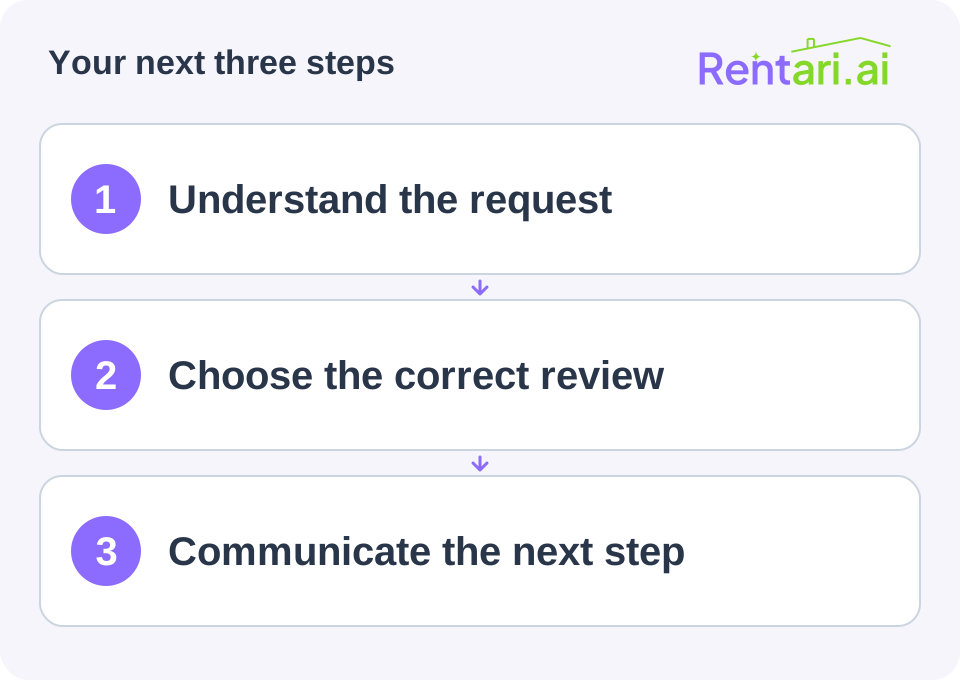
Record the request without assumptions
Capture the date, property and unit, requested arrangement, and preferred contact route. Avoid demanding broad medical records or asking staff to diagnose a person.
If the request concerns an accommodation, route it to the person responsible for reviewing current applicable requirements.
Check the governing rules
Review federal, state, and local requirements and the particular housing context with qualified guidance. Animal-accommodation policy and enforcement can change; do not rely on an old internet checklist, a social-media comment, or a generic pet-fee setting.
HUD maintains assistance-animal information. Confirm the currently applicable requirements before deciding what documentation, restrictions, or charges are appropriate.
Keep the process traceable
Record any lawful information request, response, reviewer, decision, and communication. Keep sensitive material separate from ordinary maintenance or leasing notes.
Coordinate practical issues such as scheduled access using neutral, relevant information. Do not circulate medical details to contractors.
Your next step is to identify who owns this review and how residents can reach them. A clear route helps prevent an accommodation request from being mistakenly treated as an automatic lease violation or billing event.
Sources and further reading
Source review: September 24, 2026. Check current requirements before acting.
Continue with a related task
Also online: An Animal Request Needs a Clear Intake Process
Chapter 4 Animal Request and Accommodation Routing Checklist
This worksheet routes an animal-related request. It does not determine eligibility, documentation standards, fees, or legal exceptions.
Work through the checklist
Use the download to keep your record.
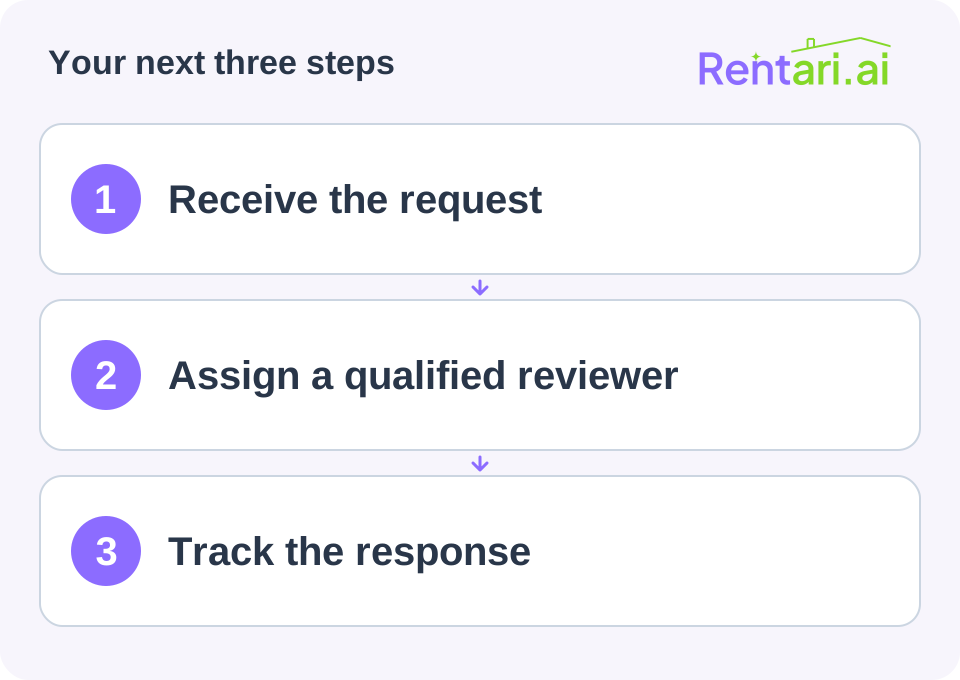
Capture only what is needed
Record the tenancy reference, received date, requested arrangement, communication method, and responsible reviewer. If the request may involve disability-related accommodation, use the designated confidential process.
Do not include diagnoses or copies of medical material in a general operations tracker.
Review before responding
Record which current federal, state, local, and program requirements were checked, and when. Obtain qualified advice for uncertainty or conflicting guidance.
Any follow-up information request should be reviewed for necessity and legality. Avoid automatic demands copied from an outdated online template.
Communicate and coordinate
Record the response, delivery date, and any operational arrangements. Keep contractors informed only of relevant access instructions.
If a complaint or incident arises, create a separate factual record instead of editing the original request to imply wrongdoing.
Review unresolved requests regularly with a named owner. A status such as under review should have a next action and update plan.
The practical benefit is an accountable process that preserves confidentiality and avoids treating every animal-related question as a standard pet charge.
Keep your completed record
Save the worksheet with the supporting records and restrict access to people who need it. This blank organizer does not calculate a legal, tax, insurance, or eligibility decision.
Sources and further reading
Source review: September 24, 2026. Check current requirements before acting.
Continue with a related task
Also online: Animal Request and Accommodation Routing Checklist
Chapter 5 Compare pet deposits, pet rent and fees before collecting them
Choose a lawful, clearly documented arrangement for ordinary pets. Compare upfront and recurring costs, keep refundable money identifiable, and review accommodation requests separately.
Start with the home and the actual request
Consider shared areas, noise, cleaning, surfaces and practical care arrangements when writing an ordinary pet policy. Explain approval and conduct requirements consistently before an applicant commits money. An old survey about pet ownership does not establish current local demand or predict a particular household's tenancy.
Distinguish an ordinary pet request from a disability-related accommodation request. Do not automatically collect a pet charge, reject an animal under a no-pets clause or require a pet addendum while that accommodation question is unresolved. Check the governing requirements and obtain qualified advice for an uncertain request.
Separate the three payment arrangements
- Refundable pet deposit: money held subject to applicable deposit rules, permitted deductions and return requirements. Keep it identifiable while checking whether it counts with other deposits toward a combined limit.
- Recurring pet rent: an agreed recurring charge where permitted. Identify its amount, frequency and starting date, and check the rent and fee rules that apply.
- One-time pet fee: a proposed charge whose permissibility and refund treatment must be checked locally. Calling a payment non-refundable does not make that treatment lawful.
A refundable deposit is not ordinary rental income or a budget to spend immediately. A recurring charge does not guarantee that damage costs will be covered, and collecting a fee does not resolve a later damage claim.
Check the total, not only each label
List every deposit, advance and fee with its purpose, amount, recipient and refund terms. Check the combined effect before collection. Deposit limits, separate pet-charge restrictions, disclosures and accommodation obligations can change the proposal.
For example, New York General Obligations Law section 7-108 generally limits a covered non-rent-stabilized tenancy's deposit or advance to one month's rent, subject to its stated exceptions. If the applicable limit is already used, an extra amount described as a pet deposit needs legal review; changing the label does not establish a new allowance. Check the actual property rather than extending this example nationwide.
Compare affordability without a national price rule
Prepare two totals: what the resident would pay before move-in, and the proposed recurring monthly amount. Include other permitted move-in charges in the first total. A larger upfront amount can affect affordability even when a landlord expects to return it later.
For arithmetic only, a permitted $20 recurring charge would total $240 over twelve charged months or $60 over three. These are not recommended rates, legal allowances or repair reserves. Obtain current local comparisons and actual repair-cost information; historical percentages or a national rent range do not establish permission to charge.
Write the agreement and preserve condition evidence
For ordinary pets, record approved animals, shared-area conduct, waste removal, reporting and lawful payment terms. Keep the addendum consistent with the lease and advertised offer. Rentari's pet addendum is a starting point to review for the property; a downloadable form does not establish that every optional charge is allowed.
Keep move-in condition records and investigate actual problems promptly. At move-out, distinguish damage from ordinary wear and pre-existing conditions. Preserve dated photographs, relevant messages, invoices and the calculation supporting a permitted deduction. Do not charge twice for the same loss or assume damage beyond a deposit can never be pursued; verify the lawful accounting and dispute process.
Use current accommodation guidance
HUD withdrew FHEO Notices 2013-01 and 2020-01 in its September 17, 2025 notice. Do not rely on a historical rental article or either withdrawn notice as the current decision procedure. Review applicable law, current agency material and case-specific advice, including state and local protections.
Record the request and reviewed outcome securely, limit sensitive information and keep ordinary pet charges separate from accommodation analysis. An agency guidance change alone does not answer every question about a resident's rights or a property's obligations.
Your next-step checklist
- Identify an ordinary pet request or one needing accommodation review.
- Check current property, state and local requirements.
- List all upfront and recurring charges and their treatment.
- Review the combined amount and resident cost before offering terms.
- Document conduct rules and permitted charges.
- Preserve condition records and account for refundable money.
- Complete the applicable itemization and return process.
Sources and further reading
Also online: Compare pet deposits, pet rent and fees before collecting them
Chapter 6 Keep Animal Policy, Access Planning, and Incident Records Separate
Animal-related questions often combine three different issues: a policy request, a contractor visit, and a reported incident. Separate them so one does not distort the others.
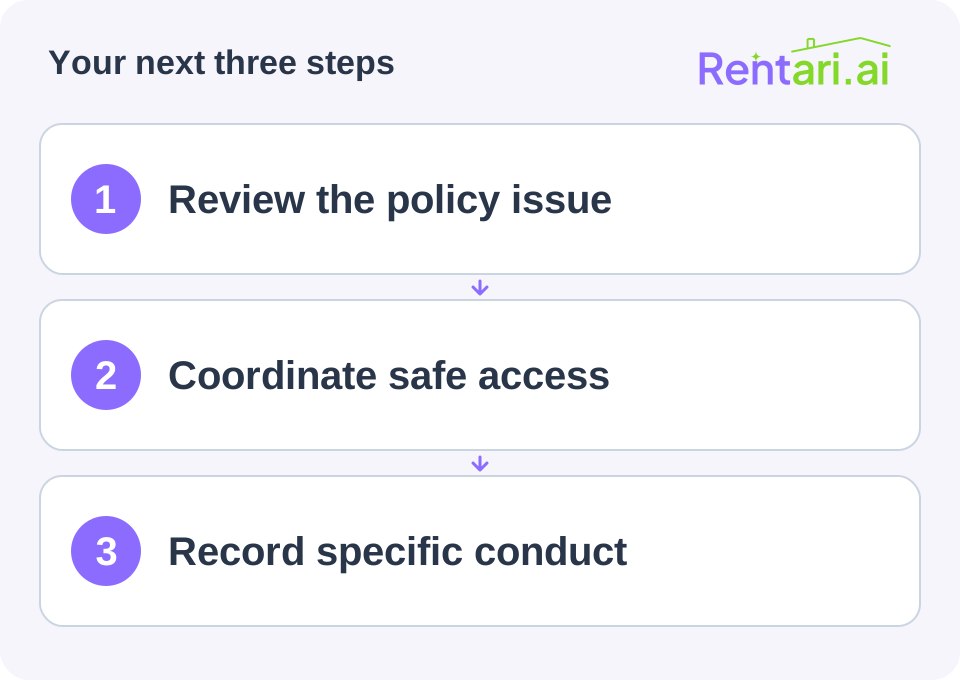
Use the right policy process
Identify whether the matter involves an ordinary pet arrangement or an accommodation request. Have the responsible reviewer check current applicable requirements before changing fees, restrictions, or tenancy terms.
Do not infer the result from a breed label, an internet certificate, or an unrelated complaint.
Plan necessary access
For a scheduled visit, communicate the relevant access arrangements and what residents and vendors have agreed to do. Follow lawful entry procedures and any applicable accommodation obligations.
Share only information needed for the visit. Medical documentation does not belong in a contractor work order.
Document an actual incident
If specific conduct is reported, record date, location, observable events, witnesses where appropriate, and immediate response. Distinguish firsthand observation from a secondhand statement.
Address urgent danger through the proper emergency route. Any subsequent policy or enforcement decision needs the applicable legal review and evidence.
A well-organized file can show a request, an access plan, and an incident without treating them as interchangeable. That makes the next decision clearer and reduces unnecessary disclosure.
Continue with a related task
Also online: Keep Animal Policy, Access Planning, and Incident Records Separate